


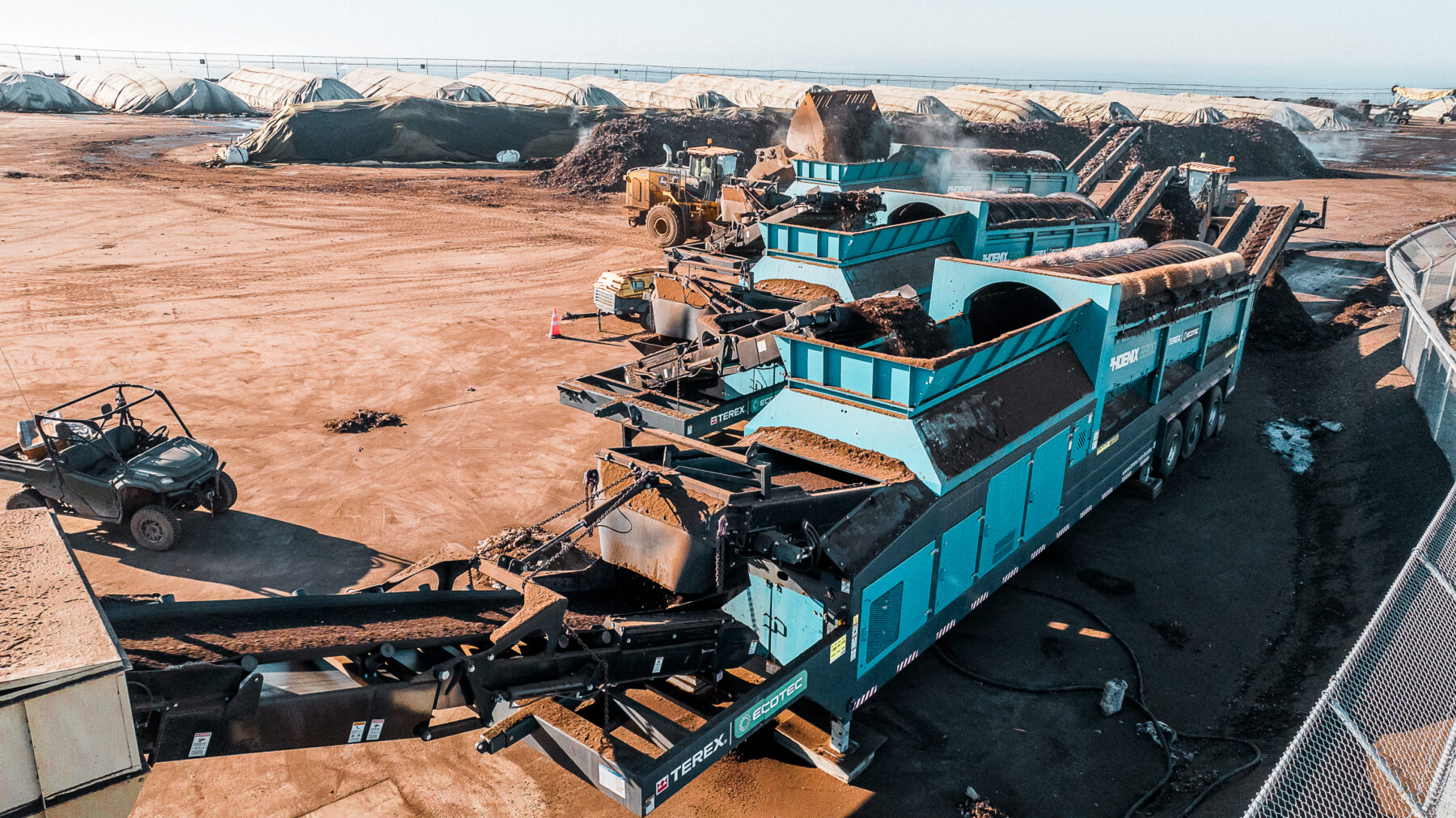
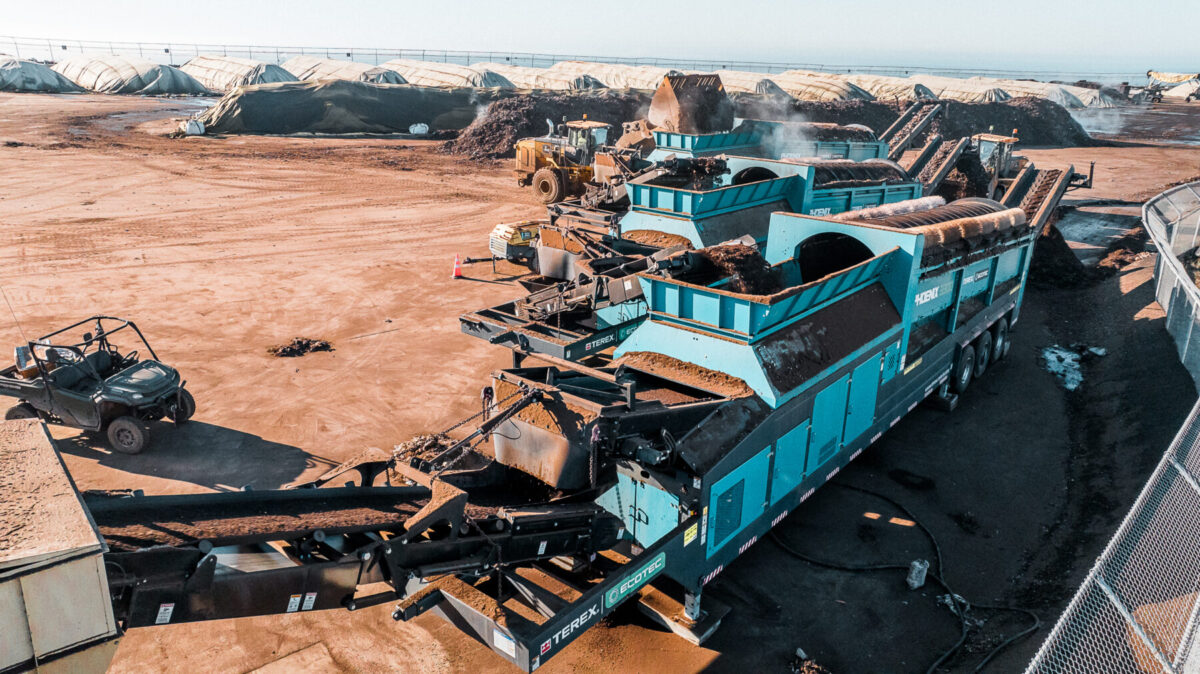
A trio of Terex Ecotec Phoenix 3300 trommel screeners supplied by Powerscreen of California allow the City of Santa Barbara’s Tajiguas Landfill to separate finished compost product from their organic waste material, efficiently producing a high-quality product which is clean of contaminants.
Perched on the hillside overlooking the Pacific Ocean in Santa Barbara, California, the Tajiguas Landfill isn’t your typical landfill operation. Thanks to a cutting-edge compost management system and the forward-thinking approach of the County of Santa Barbara’s Public Works Department, the site is setting a new standard in sustainable waste management. At the heart of this operation is Dylan Ellis, Refuge Supervisor, who leads the charge at the landfill’s compost management unit. With a focus on maximizing organic waste diversion, reducing environmental impact, and producing high-quality compost, Ellis and his team have invested in advanced equipment to achieve these goals from Powerscreen of California, Nevada, & Hawaii.
Beyond Traditional Waste Management
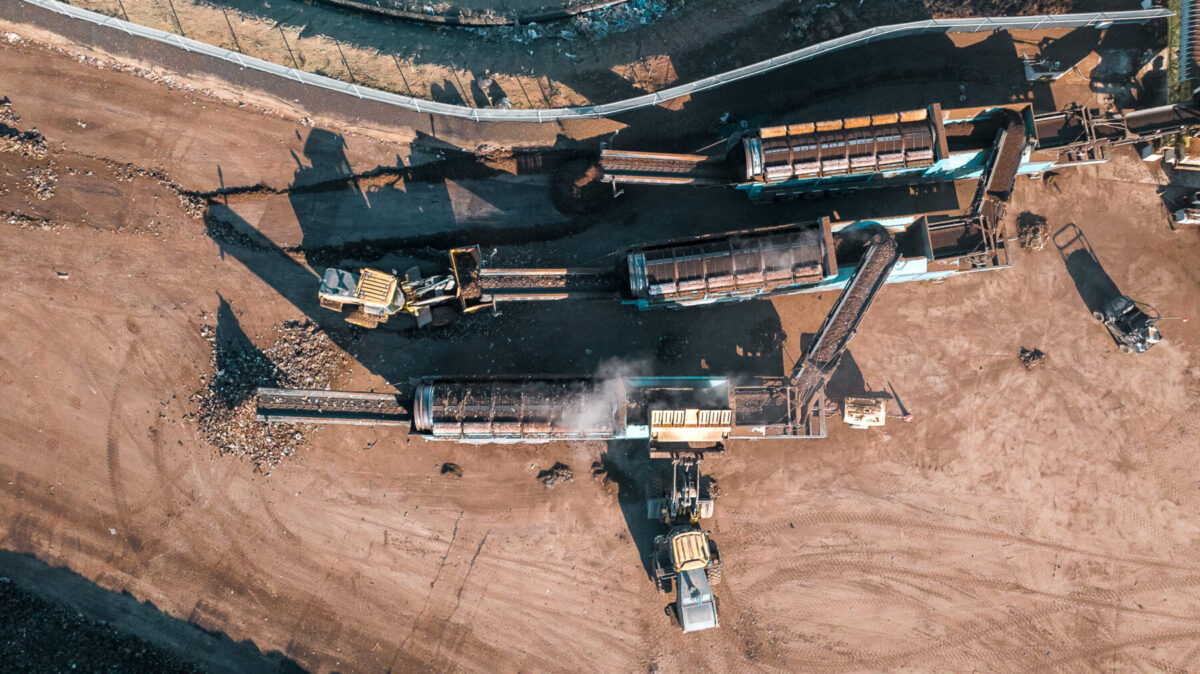
The compost management unit at the Tajiguas Landfill is part of an innovative combined project that includes an anaerobic digestion facility. The facility is designed to process the organic fraction of municipal solid waste (MSW) material that would otherwise take up space in the landfill, into usable products through a multi-stage system utilizing their three Terex Ecotec Phoenix 3300 trommel screeners.
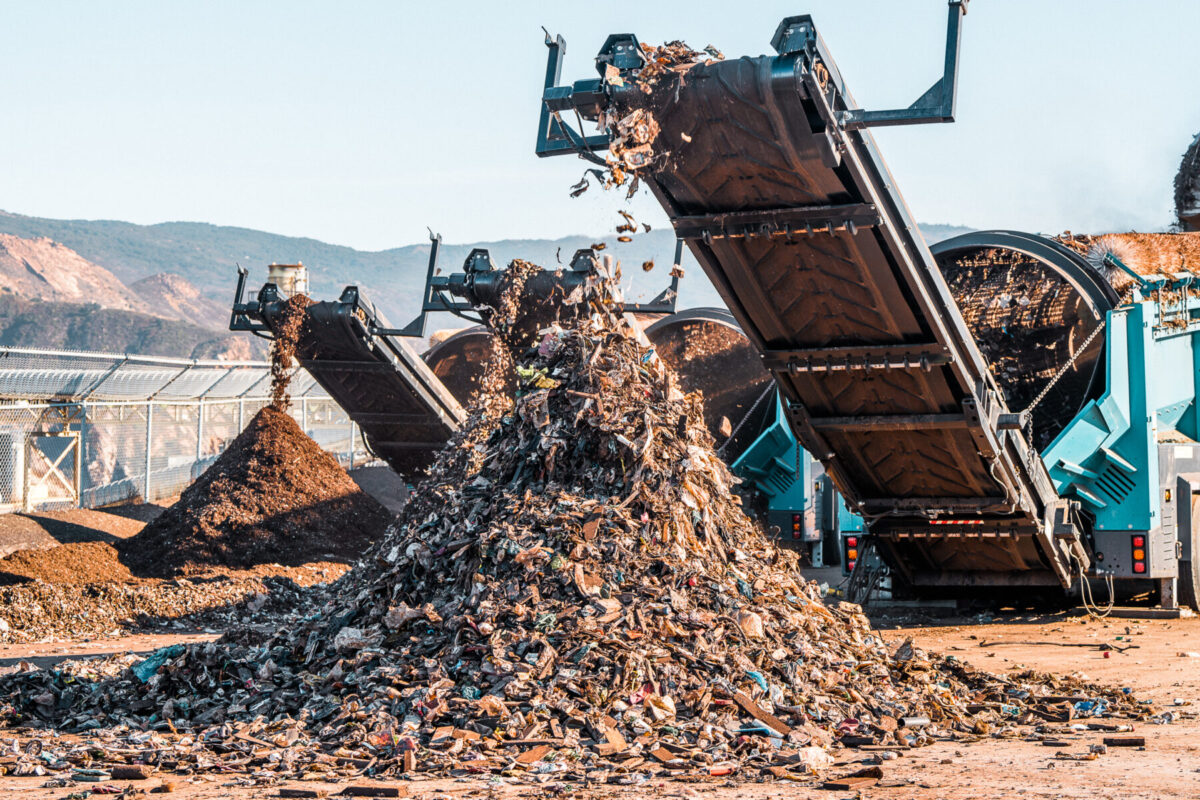
The facility takes in the organic fraction of municipal solid waste from their material recycling facility and anaerobically digests that material for 35 to 40 days. After which, they use their three Phoenix 3300 trommel screeners to further screen the material to meet product quality needs. The result is an efficient process that not only reduces landfill volume but also produces valuable compost and clean, reusable material, turning waste into a resource.
Strategic Screening Process
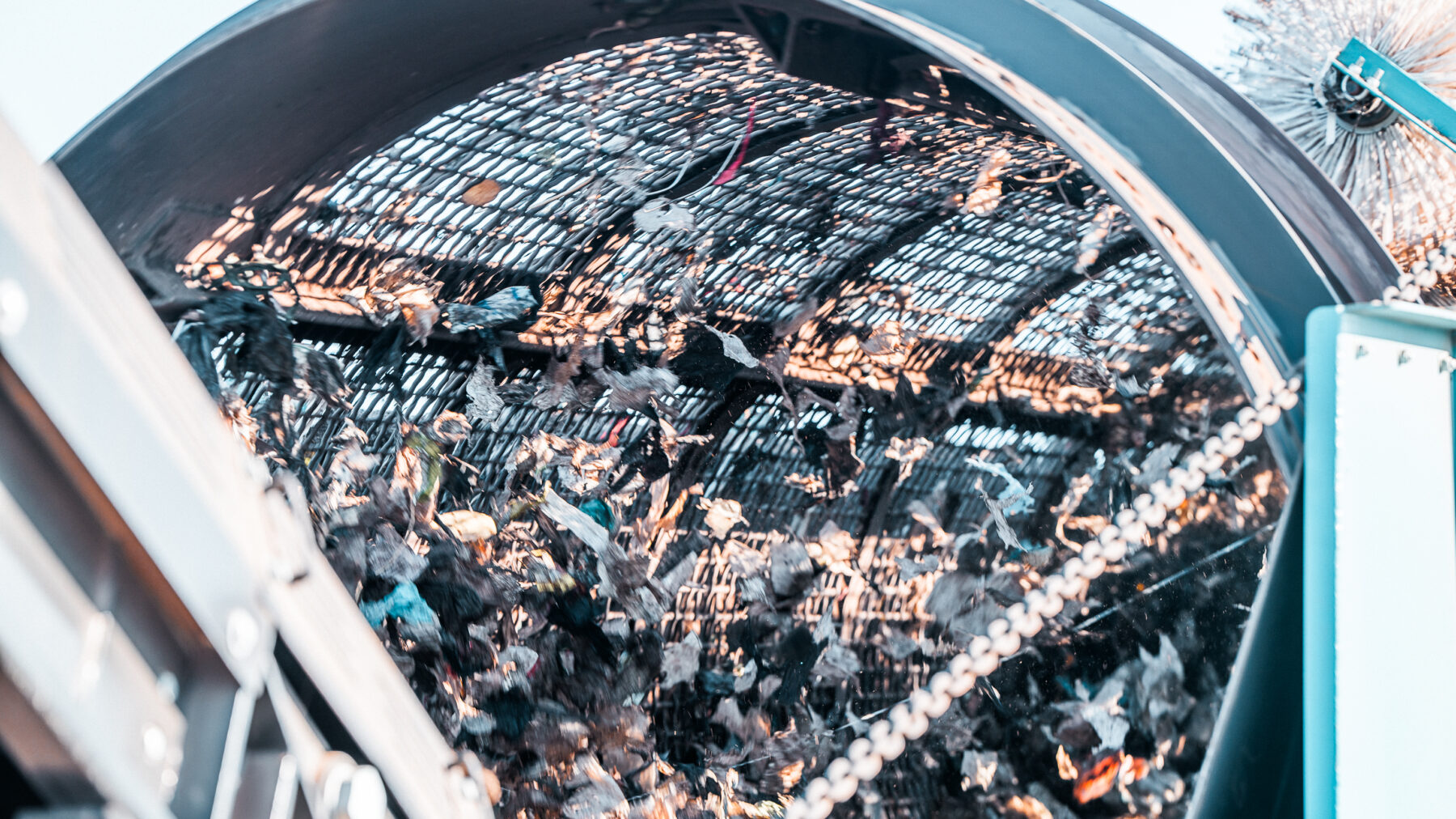
Once the anaerobic digestion process is complete, the material heads to the trommel screeners for the next critical stage of processing. The incoming material typically ranges from 3-inch minus size, combined with source-separated organics. The screening process is done in three stages using the Phoenix 3300 trommel screeners: initial screening at 2 inches, secondary screening at 5/8 inch, then final screening at 1/4 inch. After screening through each of the trommels, the material is then directed to their densimetric table, where it undergoes forced air separation. This step removes any 1/4 inch minus fraction of glass and rocks, helping ensure that the final product meets their strict compost quality standards.
For Dylan and his team, choosing the Terex Ecotec Phoenix 3300s was based on its reputation for performance, flexibility, and reliability. Known as the largest trommel screener in the Ecotec lineup, the Phoenix 3300 is capable of handling high volumes while providing precise control over screening parameters. The Phoenix 3300 boasts several key features that have proven essential for the landfill’s operation, such as its 30’6” x 7’6” drum,10.2 cubic yard hopper, and 180° swivel fines conveyor with a 19’ discharge height. Additional key features that Dylan shared he favored were the variable speed control with load sensing and automatic feeder shutoff, a four-wheel drive system with high-performance friction grip wheels, and the ability to operate the drum in both directions. This suite of features provides maximum control, allowing operators to adjust for varying material characteristics, including inconsistent moisture content, a common challenge at the site.
Operator Control is Key
“These machines are incredible, especially when it comes to control,” Dylan shared. Given the nature of the material processed at Tajiguas, moisture levels can vary widely, which adds complexity to the screening process. The flexibility to fine-tune machine speeds and adjust screening performance on the fly is one of the main reasons Dylan and his team opted for the Phoenix 3300 units.
“We do not have a consistent moisture content here, which requires flexibility in how I control the machines to produce the correct materials we need,”
added. “That flexibility is a major reason why we went with the Phoenix 3300 trommels.”
The ability to manage drum speed, belt speed, and fines conveyor direction through remote operation not only boosts production efficiency but also minimizes downtime, keeping the operation running smoothly even under tough conditions.
Working with Powerscreen of California, Nevada, & Hawaii
Choosing the right machines is only part of the success story. Equally important for Dylan has been the dependable service and support from Powerscreen of California, Nevada, & Hawaii. From the initial purchase to ongoing support, their team has delivered responsive assistance that has kept operations moving without unnecessary delays.
Dylan noted that his sales representative, Tom O’Malley, has played a pivotal role in their positive experience. “Tom has been excellent at fast communication, always quick to answer any parts or service needs,” Dylan said. The support extends beyond just the availability of parts, it’s the knowledge, troubleshooting, and fast turnaround that helps ensure the Tajiguas Landfill operation continues to meet its demanding production goals.
A Model for Sustainable Waste Management
With landfill capacity at a premium and environmental stewardship a growing priority, the Tajiguas Landfill’s compost management unit stands as a model for integrated, sustainable waste processing. The use of anaerobic digestion combined with effective mechanical screening and air separation not only diverts waste from the landfill but also produces high-quality compost that benefits the community. The choice of reliable, well-designed machinery like the Terex Ecotec Phoenix 3300 Trommel Screener, paired with responsive dealer support from Powerscreen of California, Nevada, & Hawaii, has enabled Dylan Ellis and his team to maintain high production rates while meeting strict quality requirements.
As Dylan and the County of Santa Barbara’s Public Works Department continue their work at the Tajiguas Landfill, the focus remains on improving efficiency, maximizing material recovery, and providing environmentally sound waste solutions. With a reliable fleet of trommel screeners, a dedicated support team, and an innovative approach to waste management, the future looks bright for this forward-thinking operation. For Dylan Ellis, it’s about more than just machines, it’s about having the tools and support needed to make a real impact on the way waste is handled in Santa Barbara County and the surrounding SoCal communities.
 (707) 253-1874